As a nitrile rubber sheet supplier who’s worked with industrial, marine, and aquaculture clients for over 12 years, I’ve seen firsthand how one small oversight can turn a seemingly simple rubber sheet purchase into a costly underwater failure. A few years back, I had a client in the coastal logistics space who bought a cheap nitrile sheet for sealing their underwater valve housings—thinking all nitrile is the same. Within six months, the material swelled, lost its tensile strength, and let saltwater leak into the control system, costing them $45,000 in downtime and repairs. That incident drove home a critical point: nitrile rubber isn’t a “one-size-fits-all” solution for underwater uses. To help you avoid a similar misstep, here are the non-negotiable precautions I walk every client through when specifying nitrile rubber sheets for submerged applications. Nitrile Rubber Sheet
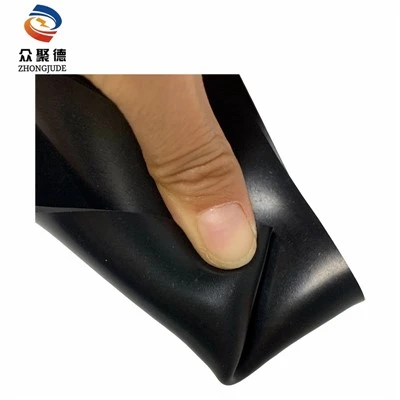
First, you have to get specific about the nitrile grade’s acrylonitrile (ACN) content—and match it directly to your underwater environment. Nitrile’s most defining trait is its resistance to oils and hydrocarbons, which comes from its ACN molecular structure: higher ACN percentages mean tighter bonds that repel non-polar substances, while lower ACN makes the rubber more flexible and water-resistant, but less oil-resistant. But here’s the catch most non-specialists miss: underwater conditions vary wildly, so generic “high ACN” nitrile won’t work for every scenario. If you’re working in freshwater, say for a dam gate seal or a lake-based aquaculture tank, a medium ACN (31–35% ACN) grade is ideal. It balances flexibility to seal gaps in slow-moving or still water and avoids the swelling that plagues too-high ACN materials in fresh, low-mineral environments. Too often, clients opt for a 40% ACN sheet thinking it’s “tougher,” only to find it absorbs freshwater over time, leading to brittleness and cracking when the sheet expands and contracts with temperature shifts. For saltwater applications—think offshore pipeline couplings, coastal mooring buffers, or marine buoy liners—you need a medium-high ACN (35–38% ACN) grade. Saltwater is a polar electrolyte solution, so higher ACN creates a tighter molecular barrier that resists osmotic pressure and chemical degradation from sodium, magnesium, and chloride ions. Skip the low ACN (25–30% ACN) sheets here, too: they’ll leach plasticizers into saltwater, break down quickly, and leave gaps in seals within a year. I always remind clients, “Your ACN grade is the foundation—pick the wrong one, and no other precaution will fix it.”
Next, don’t overlook water temperature extremes, which directly impact nitrile’s performance and lifespan in underwater settings. Underwater environments aren’t static: a freshwater tank in Minnesota can drop to 32°F (0°C) in winter and climb to 75°F (24°C) in summer, while offshore waters in the Gulf of Mexico can hover between 50°F (10°C) and 85°F (29°C) year-round. Nitrile’s temperature rating tells you how it holds up, but you have to account for both continuous exposure and sudden fluctuations. For cold underwater applications (below 40°F/4°C), standard nitrile has a tendency to harden, lose elasticity, and fail to seal small gaps. If you’re working in cold lakes, arctic coastal rig support, or submersible pump seals for deep, cold water, you need a low-temperature grade of nitrile rubber sheet with a brittle point below -20°F (-29°C). These are formulated with specialized plasticizers and polymer modifiers that keep the rubber pliable enough to compress against metal or concrete components even at freezing, preventing leakages when the material would otherwise crack. For hot underwater applications (above 100°F/38°C), regular nitrile can soften excessively, reducing its tear strength and causing it to shift out of place in seals or liners. If you’re dealing with hot water systems, geothermal heat exchangers, or shallow tropical marine structures, opt for a heat-stabilized nitrile grade. This grade is cross-linked during manufacturing to resist thermal degradation, so it won’t become too soft to perform its structural task at sustained high temperatures. I once had an aquaculture client who installed standard nitrile for their hot freshwater farm’s oxygen diffuser liners; within three months, the rubber softened, the diffuser blades bent, and the oxygen levels dropped, killing 20% of their tilapia stock. That mistake cost them $120,000 in fish alone—proof that testing your local water’s temperature range against the nitrile’s specs is non-negotiable.
Then, address the chemical load of your underwater environment, beyond just water type. Saltwater isn’t the only chemical factor: many underwater applications are in environments with residual hydrocarbons, sewage runoff, agricultural fertilizers, or industrial wastewater—all of which can degrade nitrile if the material isn’t formulated for those specific chemicals. Generic nitrile resists mild oils and fuels, but if your underwater sheet will be exposed to diesel spills, crude oil, or strong acids (from agricultural runoff in irrigation canals), you need to specify a specialty nitrile grade, not standard industrial nitrile. For example, if you’re sealing a stormwater drainage pipeline that carries occasional fuel runoff, a hydrogenated nitrile (HNBR) sheet is a must. HNBR is saturated with hydrogen bonds that make it far more resistant to oxidative degradation from oils and chemicals than standard nitrile, so it won’t swell, soften, or break down when exposed to hydrocarbons in underwater flow. If you’re in an area with acidic freshwater from acid rain or agricultural nitrate runoff, a nitrile sheet with added anti-oxidant and anti-ozonant additives is critical. Ozone, which is present in wastewater and some industrial effluents, can cause nitrile to crack from the inside out when submerged, even if the water itself isn’t especially corrosive. I recommend that clients request a “chemical compatibility test” from their nitrile supplier before finalizing an order: this test will show how the sheet will react to the exact chemicals in your underwater environment, so you don’t waste money on a material that will fail in 18 months instead of 10 years.
Another big precaution is thickness and compression set resistance—two specs that directly tie to long-term seal integrity underwater. Underwater seals are rarely static: tides, water pressure shifts, and structural movement (like a dock’s concrete supports shifting in winter) mean the rubber sheet will be compressed and decompressed over time. Compression set is the percentage of deformation a material retains after being compressed, and it’s a make-or-break spec for underwater nitrile sheets. A high-quality nitrile for underwater use should have a compression set (at 70°F/21°C after 22 hours) of 20% or lower. If the compression set is higher than that, the sheet won’t spring back to its original shape after being compressed, leaving gaps that let water leak in. For deep underwater applications—where hydrostatic pressure can reach 30 psi per 10 feet of depth, creating extreme compression—you need a compression set of 15% or lower. I’ve seen clients use thin 1/16-inch nitrile sheets for deep-sea valve seals; while thin sheets are cheaper, they can’t resist the long-term compression from deep water, so they deform permanently within a year. For deep water, opt for at least 1/8-inch thick nitrile sheets, and for areas with frequent structural movement, go with 3/16-inch or thicker. The extra thickness adds bulk that helps the material maintain its shape under pressure, reducing the risk of compression set failure. I always tell clients: “Thicker isn’t just a cost—for underwater, it’s a warranty against leaks.”
You also need to account for installation and preparation, which is where even a perfect nitrile sheet can fail. I can’t tell you how many times I’ve gotten a call from a client whose nitrile sheet worked great in testing but failed after installation, because they skipped proper surface prep. Underwater seals rely on the sheet bonding tightly to the mating surface (metal, concrete, fiberglass), so if that surface is covered in salt deposits, algae, rust, or loose concrete, the rubber won’t form a continuous seal. Before installing a nitrile sheet underwater, the mating surface has to be grit-blasted to remove all contaminants, and any loose material has to be scrubbed away. For saltwater installations, the surface also needs to be rinsed with fresh water immediately before installation to remove salt crystals, which can create tiny gaps between the sheet and the surface. Another common installation mistake is using the wrong adhesive. Generic construction adhesive won’t bond to nitrile underwater; you need a marine-grade adhesive specifically formulated for rubber-to-metal or rubber-to-concrete underwater applications. Even a small mistake here—like using a standard acrylic adhesive that doesn’t cure underwater—can cause the sheet to peel away from the surface, leading to leaks. If you’re installing a nitrile sheet in a hard-to-reach submerged spot, like an underwater pipeline joint, I also recommend asking your supplier for pre-vulcanized nitrile sheets. Pre-vulcanized sheets have a stronger molecular structure than non-vulcanized ones, so they’re more resistant to tearing when installed in tight spaces, and they bond better to marine adhesives.
Finally, don’t overlook long-term maintenance and lifecycle, which is part of using nitrile rubber sheets underwater. Even the best-spec’d sheet won’t last forever, so you need a maintenance plan to catch issues before they cause big problems. First, if you can access the area periodically (even partially submerged, like a dock’s underwater fenders), schedule annual inspections to check for signs of degradation: cracking, swelling, discoloration, or softness. For fully submerged areas that are hard to reach, use a ROV (remotely operated vehicle) to inspect the sheet every two years—this is way cheaper than repairing a failed seal after it’s caused structural damage. Also, avoid harsh cleaners or chemicals during maintenance. If you need to clean the nitrile sheet, use a mild marine detergent and a soft brush, not pressure washers or chemical cleaners that can strip the sheet’s anti-degradation additives. I always advise clients to track their nitrile sheets’ performance: note when they were installed, what grade they are, and how often inspections find small issues. This data will help you adjust your specs over time, so you’re not overspending on a grade that’s too high, or underspending on one that’s too low for your conditions.

I’ve spent 12 years working with nitrile rubber sheets, and the number one takeaway I want every client to know is: underwater use isn’t a side note—it’s a condition that requires intentional, specific choices. Skip the generic industrial nitrile, get the right ACN grade, test for your local temperature and chemicals, prioritize compression set and thickness, prep surfaces correctly, and set up a maintenance plan. All of these small precautions add up to a nitrile sheet that will last 10+ years underwater, not just 12 months. If you’re specifying nitrile rubber sheets for underwater applications and want to walk through your exact environment, get a compatibility check, or ask for sample grades tailored to your needs, feel free to reach out to connect for a procurement discussion.
Acid Resistant Rubber Sheet References
- ASTM D2000, Standard Classification System for Rubber Products in Automotive Applications
- Society of Plastics Engineers (SPE), “Nitrile Rubber for Marine Applications,” 2021
- International Marine Purchasing Association (IMPA), “Guidelines for Underwater Rubber Component Specification,” 2022
- Rubber Chemistry and Technology, “Hydrostatic Degradation of Nitrile Rubber in Saltwater Environments,” Vol. 94, No. 3, 2021
- National Marine Manufacturers Association (NMMA), “Recommended Practices for Submerged Seal Materials,” 2020
Hebei Zhongjude Power Technology Co., Ltd.
With abundant experience, we are one of the most reliable nitrile rubber sheet manufacturers and suppliers in China. Welcome to buy bulk high quality nitrile rubber sheet for sale here and get quotation from our factory. For price consultation, contact us.
Address: Shenghe Plaza, No. 88 Qilian Street, High-tech Zone, Shijiazhuang City, Hebei Province, China
E-mail: zhongjude@outlook.com
WebSite: https://www.zjdinsul.com/
