Hybrid security cables are at the forefront of modern security infrastructure, designed to safeguard valuable assets and information from unauthorized access and tampering. As a leading supplier of hybrid security cables, I have witnessed firsthand the critical role these cables play in various security – conscious environments. In this blog, I will delve into the mechanisms by which hybrid security cables resist tampering, exploring the technologies and design features that make them a reliable choice for security applications. Hybrid Security Cable
Physical Design and Construction
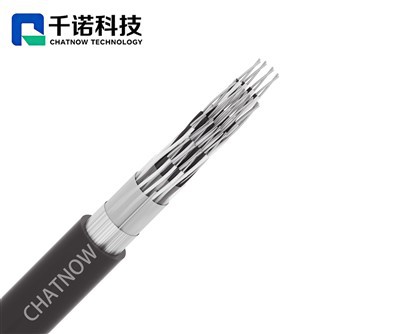
One of the fundamental ways hybrid security cables resist tampering is through their robust physical design. These cables are engineered with multiple layers of protection, each serving a specific purpose in preventing unauthorized access.
The outer jacket of a hybrid security cable is typically made from a durable and abrasion – resistant material, such as polyurethane or polyethylene. This outer layer not only protects the internal components from physical damage but also provides a barrier against environmental factors, such as moisture, UV radiation, and chemicals. The material is chosen for its toughness, making it difficult for an intruder to cut or damage the cable easily.
Beneath the outer jacket, there are usually additional layers of protection, such as armor. Armored hybrid security cables incorporate a layer of metal mesh or tape, often made of steel or aluminum. This armor layer provides mechanical protection, making it extremely difficult to cut through the cable with common tools. Even if an attacker attempts to use power tools, the armor can significantly slow down the cutting process, buying time for security systems to detect the intrusion.
In addition to the armor, some hybrid security cables feature a conductive shield. This shield is made of a conductive material, such as copper, and serves multiple functions. Firstly, it protects the cable from electromagnetic interference (EMI) and radio – frequency interference (RFI), which can disrupt the signals transmitted through the cable. Secondly, the shield can be used as part of a tamper – detection system. If the shield is cut or damaged, it will disrupt the electrical continuity, triggering an alarm in the security system.
Tamper – Detection Technologies
Hybrid security cables often integrate advanced tamper – detection technologies to provide real – time monitoring and alerting. These technologies are designed to detect any attempt to tamper with the cable, whether it is a physical cut, a break in the shield, or an attempt to access the internal conductors.
One common tamper – detection technology is the use of fiber – optic sensors. Fiber – optic sensors are embedded within the cable and are sensitive to changes in light transmission. When the cable is bent, cut, or otherwise damaged, the light transmission through the fiber – optic sensor is disrupted. This disruption is detected by a monitoring device connected to the fiber – optic sensor, which can then trigger an alarm or send a notification to the security personnel.
Another tamper – detection method involves the use of electrical sensors. These sensors can monitor the electrical properties of the cable, such as resistance, capacitance, or voltage. Any change in these electrical properties can indicate a tampering attempt. For example, if the cable is cut, the resistance of the electrical circuit will change, which can be detected by the electrical sensor. This detected change can be used to activate the security system’s alarm.
Some hybrid security cables also incorporate a built – in microcontroller or a monitoring chip. This chip can continuously monitor the cable’s status and communicate any anomalies to a central security control system. The microcontroller can perform self – checks and analyze the data from the various sensors to determine if a tampering event has occurred.
Encryption and Authentication
In addition to physical and sensor – based protection, hybrid security cables can also use encryption and authentication mechanisms to resist tampering. These mechanisms ensure that the data transmitted through the cable is secure and that only authorized devices can access the information.
Encryption is the process of encoding the data so that it cannot be read by unauthorized parties. Hybrid security cables can use advanced encryption algorithms, such as AES (Advanced Encryption Standard), to protect the data transmitted through the cable. Even if an attacker manages to access the cable and intercept the data, they will not be able to decrypt it without the correct encryption key.
Authentication is another important security feature. Hybrid security cables can use authentication protocols to verify the identity of the devices connected to the cable. This ensures that only authorized devices can send or receive data through the cable. For example, a device may need to present a digital certificate or a unique password to establish a connection with the cable. If the authentication fails, the connection will be denied, preventing unauthorized access to the data.
Installation and Maintenance
Proper installation and maintenance are also crucial for ensuring the effectiveness of hybrid security cables in resisting tampering. During installation, the cables should be routed in a way that minimizes the risk of exposure to potential tampering. For example, cables can be installed in conduits or hidden within walls or ceilings to make them less accessible to unauthorized individuals.
Regular maintenance is also necessary to keep the cables in good working condition. This includes inspecting the cables for signs of damage or wear, checking the integrity of the tamper – detection sensors, and ensuring that the encryption and authentication mechanisms are functioning properly. Any damaged cables should be replaced immediately to prevent security vulnerabilities.
Conclusion

Hybrid security cables are a powerful tool in the fight against tampering and unauthorized access. Through their robust physical design, advanced tamper – detection technologies, encryption, and authentication mechanisms, these cables provide a high level of security for critical applications. As a supplier of hybrid security cables, I am committed to providing our customers with the highest quality products that meet their security needs.
Flexible Cable If you are in the market for reliable hybrid security cables to enhance the security of your assets and information, I encourage you to contact me for a detailed discussion. Our team of experts can help you select the most suitable cables for your specific requirements and provide you with professional installation and maintenance services.
References
- "Handbook of Physical Security Systems", by Peter T. Andrews.
- "Fiber – Optic Sensors: Principles and Applications", by Ahmad E. Willner and Amr Helmy.
- "Cryptography and Network Security: Principles and Practice", by Douglas R. Stinson.
Zhejiang Chatnow New Material Technology Co., Ltd.
Zhejiang Chatnow New Material Technology Co., Ltd. is well-known as one of the leading hybrid security cable manufacturers and suppliers in China, specialized in providing high quality customized service. Please feel free to wholesale high-grade hybrid security cable at competitive price from our factory.
Address: Building 12, No.9 Huajin Road, ZhouWangMiao Town Innovation Center, Haining, Zhejiang 314400
E-mail: info@chatnow-cable.com
WebSite: https://www.chatnow-cable.com/
