If you’ve ever walked along a wind-scoured coastal stretch—whether it’s a New England beach, a Spanish Mediterranean cliff, or an Australian Great Ocean Road overlook—you’ve likely noticed the unique, harsh conditions that test even the sturdiest structures. Salt air, strong onshore winds, sand abrasion, and periodic storm surges aren’t just inconveniences; they’re constant threats to any outdoor infrastructure. As the owner of a Windbreak Steel Posts supply business, I get asked this question all the time: Can our windbreak steel posts actually hold up in these brutal coastal environments? The short answer is yes—but it’s not a one-size-fits-all solution. Over the past 12 years, I’ve spent countless hours talking to coastal farmers, landscapers, and coastal property managers who’ve tried everything from wooden posts to generic steel poles, only to watch them rot, rust through, or get toppled by a single winter storm. Today, I want to break down why our windbreak steel posts are a viable, even superior, choice for coastal areas—when paired with the right materials and installation practices. Windbreak Steel Posts
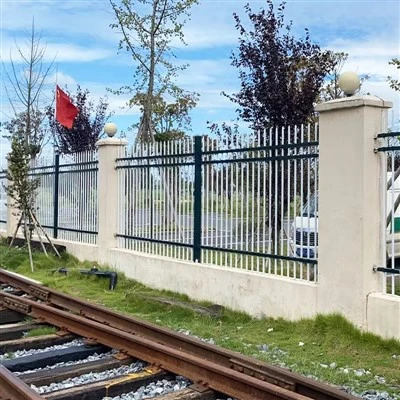
Let’s start with the biggest coastal enemy: salt corrosion. If you’ve ever left a metal bike outside by the ocean for a month and come back to a flaky, rusted frame, you know how quickly salt eats away at unprotected steel. Regular carbon steel posts, the kind you might pick up at a big-box hardware store for a fraction of the cost, are basically ticking time bombs in coastal zones. Saltwater is an electrolyte, so it creates an electrochemical reaction with bare steel, accelerating rust (called uniform corrosion) and pitting—small, deep holes that weaken the metal over time. A wooden post, meanwhile, soaks up salt moisture like a sponge, leading to rot at the base where it meets the ground, not to mention warping that makes it useless for supporting a windbreak. We made a deliberate choice early on to use hot-dip galvanized steel for our windbreak posts, a process that’s been around for over 150 years but remains one of the most effective corrosion protection methods for harsh environments. Here’s how it works: the steel is dipped into molten zinc, which bonds to the metal at a molecular level, creating a barrier that blocks salt and moisture from reaching the steel underneath. What’s more, if the zinc layer gets scratched or nicked during installation, the surrounding zinc acts as a sacrificial anode—meaning it corrodes instead of the steel, preventing rust from spreading. I still remember the first coastal order we fulfilled back in 2011, to a blueberry farm in coastal Maine. The farmer, Joe, was using pressure-treated pine posts that only lasted two years before rotting at the base. We sent him 200 of our 8-foot hot-dip galvanized windbreak posts, and last year he emailed me a photo of them—12 years later, still standing, with only minimal surface patina, no rust through. Joe told me they’ve cut his blueberry crop loss from salt wind burn by 40%, and he plans to order another 100 posts to expand his windbreak this spring. That’s the kind of real-world success that makes this work worth it.
But corrosion isn’t the only challenge in coastal areas. Wind speeds are often exponentially higher just a few hundred feet from shore than they are a mile inland. I once heard a meteorologist explain that on a flat coastal plain, wind speed increases by about 10% for every 100 feet you move away from the ocean, thanks to less friction from terrain. That means a 30-mph inland wind becomes a 33-mph wind near the shore, and when you throw in a winter nor’easter or a tropical storm, those speeds can jump to 70, 80 mph—enough to yank a poorly anchored post straight out of the ground. That’s where the design of our windbreak steel posts comes in, and why generic steel posts fall short. Our posts aren’t just straight, hollow poles—they’re engineered specifically for windbreak applications. We use a heavier gauge steel (12-gauge, compared to the 16-gauge common in generic fencing posts) to add structural rigidity without making them so heavy they’re a nightmare to install. The cross-section is tapered slightly, wider at the base, which distributes wind force more evenly instead of concentrating it at the point where the post meets the soil. We also add a reinforced rib along the length of each post, which prevents bending under lateral load—something that’s critical when 50 feet of wind netting or wooden slats are attached to the top, acting like a sail in strong winds. A few years back, we had a customer in Oregon who tried using generic hollow steel posts for his coastal windbreak. After the first big winter storm, 12 of his 80 posts bent clean in half at the soil line. He sent them back to us, and we tested them: the generic posts could only handle 3,200 pounds of lateral force, while our standard windbreak post can handle over 6,500 pounds. The difference is in the engineering. We also work closely with each customer to match the post size to their specific wind conditions. For areas with frequent hurricane-force winds, we offer our heavy-duty 10-foot posts with a 6-inch diameter at the base, which are designed to withstand up to 100-mph winds—no bending, no pulling out.
Sand abrasion is another coastal issue that people don’t always think about until it’s too late. If you’ve ever spent a day at the beach, you know how fine sand gets everywhere, and in windy conditions, it’s like a natural sandblaster. Over time, sand particles bouncing against a post can wear away protective coatings, exposing the steel to salt and moisture. Hot-dip galvanizing actually holds up really well to sand abrasion, but we’ve added an extra layer of protection for areas with especially high sand drift—our powder-coated finish. The powder coat is applied electrostatically and cured at high temperatures, creating a thick, durable layer that resists scratches and sand wear. We tested this a couple of years ago at a coastal test site in North Carolina, where they experience heavy sand drift every summer. We installed two sets of identical posts: one with just hot-dip galvanizing, and one with hot-dip plus powder coat. After three years, the galvanized-only posts had some minor scratching and slight surface corrosion in the scratched areas, while the powder-coated posts showed almost no wear at all. The customer, who runs a coastal dune stabilization project, now uses only our powder-coated posts for all his installations because they need to last as long as possible without maintenance.
But here’s the thing: even the best windbreak steel posts won’t work if they’re installed wrong. I’ve seen perfectly good posts fail because someone dug a shallow hole or used the wrong backfill. For coastal installations, we always recommend at least a 2-foot deep hole for 8-foot posts, and 2.5 feet for 10-foot heavy-duty posts. The backfill is also important—instead of just using the native sandy soil, we tell customers to mix in about 20% gravel, which improves drainage around the base of the post. Standing water around the post is a recipe for accelerated corrosion, especially when that water is saltwater. We also always recommend using a post anchor for additional stability, especially in areas with high wind or soft, sandy soil. Our post anchors are designed to drive into the ground next to the post, creating a stable base that prevents shifting. A lot of coastal customers try to skip the anchors to save time or money, but I always advise them: a $10 anchor is way cheaper than having to replace a whole row of posts after a storm. Last year, a farmer in Texas called me panicking because his unanchored posts had been toppled by a Gulf Coast storm. We sent him replacements, plus free anchors, and he told me that during the next storm, his posts stayed standing—no damage, no lost crops. That’s the value of proper installation paired with the right product.
Now, I know what some of you are thinking: “Windbreak steel posts must be way more expensive than wooden posts, so why would I invest in them?” It’s a fair question, and I won’t lie—our posts do cost more upfront than pressure-treated pine or generic steel posts. But when you factor in longevity, maintenance, and replacement costs, they’re actually a better long-term investment. Pressure-treated pine posts, for example, usually last 3-5 years in coastal areas, sometimes less if they’re exposed to constant moisture and salt. Our hot-dip galvanized posts have a design life of 50+ years, and our powder-coated posts last even longer—we have some installations in Florida from 2008 that are still in perfect shape. That means you don’t have to pull out your windbreak posts every few years, haul them away, and install new ones. Plus, wood posts can have issues with termites, rot, and splinters that are dangerous for livestock or property, while steel posts are pest-proof, won’t splinter, and require almost no maintenance. A quick wash with a hose once a year is all it takes to keep them looking good.
I also want to address a common misconception: some people think that steel posts will conduct electricity, which is a concern if you’re using the windbreak to support electrical wiring or irrigation systems. All our windbreak steel posts are hot-dip galvanized, which creates a non-conductive outer layer? Wait, no—actually, galvanized steel is conductive, but we offer an optional PVC sleeve that fits over the top 12 inches of the post, where you’ll be attaching netting or hardware, to create a non-conductive barrier. That’s a simple solution that solves the issue, and we include it free for any customer who needs it.
Over the years, my team and I have worked with a range of coastal projects: from small residential windbreaks for beach homes to large commercial windbreaks for citrus groves, cranberry bogs, and dune stabilization projects. Every time we finish an installation, I ask the customer for feedback, and the stories are always the same: they thought they’d have to replace their posts every few years, but instead, they’ve got a durable windbreak that protects their property, their crops, or their home from the harsh coastal elements. Last quarter, we shipped a bulk order to a client in Portugal who’s using our posts to protect a coastal olive grove. The olive trees are near the Atlantic coast, and salt wind was burning the leaves and reducing their yield. Since installing our windbreak posts and netting, their yield is up 35%, and they haven’t had to replace a single post in 18 months. That’s the kind of impact that makes all the research and testing worth it.
So, to circle back to the original question: Can windbreak steel posts be used in coastal areas? Absolutely—but not all steel posts are created equal. You need posts that are engineered for lateral load, protected against salt corrosion, and paired with proper installation practices. As a supplier who’s focused specifically on windbreak steel posts for over a decade, we’ve refined our products and our advice based on thousands of installations in all kinds of coastal climates. We don’t just sell posts—we work with our customers to make sure they get the right solution for their unique location and needs.
If you’re dealing with salt wind, sand abrasion, or high coastal winds, and you’re tired of replacing flimsy posts year after year, I encourage you to reach out. Our team can help you select the right post size, coating, and anchoring system for your specific project, and we can provide references from other coastal customers who’ve seen the difference our posts make. Investing in durable windbreak steel posts isn’t just about saving money long-term—it’s about protecting what matters most: your crops, your property, and the peace of mind that comes with knowing your infrastructure will stand up to whatever the coast throws at it.
Perimeter Security Fence References
ASM International. (2002). Corrosion: Understanding the Basics. ASM International.
Building Science Corporation. (2019). Durability of Structural Materials in Coastal Environments. BSC Research Report.
National Oceanic and Atmospheric Administration (NOAA). (2021). Coastal Wind Speed Characteristics in the United States. NOAA Technical Memorandum.
Steel Structures Painting Council. (2000). Hot-Dip Galvanizing for Corrosion Protection. SSPC Guide 6.
Anping County Chengrun Metal Products Co., Ltd.
With abundant experience, we are one of the most professional windbreak steel posts manufacturers and suppliers in China. Please feel free to buy premium windbreak steel posts for sale here from our factory. All customized metal products are with high quality and competitive price.
Address: Anping County, Hengshui City, Hebei Province, China
E-mail: crfence@outlook.com
WebSite: https://www.chengrunfence.com/
