Alright, let’s cut to the chase—if you’re working with two-piece molds, you know they’re the workhorses of manufacturing. They’re simple, versatile, and get the job done for everything from small consumer parts to industrial components. But here’s the thing: a two-piece mold isn’t one-size-fits-all, and skimping on the cost-benefit analysis (CBA) upfront can end up costing you way more in the long run. As someone who’s been in the two-piece mold supplier game for over a decade, I’ve seen way too many clients jump into a mold project without doing their homework, and it almost always leads to headaches. Today, I’m breaking down how to do a real, actionable CBA for a two-piece mold—no jargon, just what actually moves the needle for your bottom line. Two Piece Mold
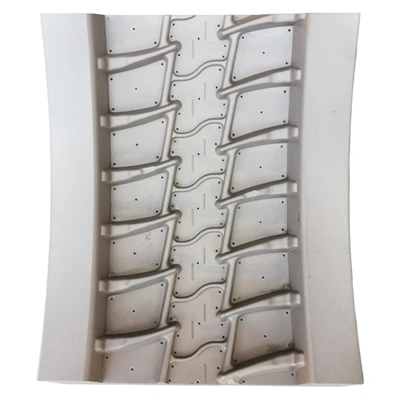
First off, let’s make sure we’re on the same page about what a two-piece mold is, because if you’re here, you probably know, but it’s worth clarifying. Unlike multi-piece molds with slides, lifters, or side actions, a two-piece mold is just two core halves: a cavity half (where your part takes shape) and a core half (which fits inside the cavity). They open along a single parting line, so they’re cheaper to build, easier to maintain, and faster to cycle—for simple parts, that’s unbeatable. But even with that simplicity, your CBA needs to go beyond “this mold costs $5k vs. $7k.” It has to tie every choice to real, long-term costs and benefits that matter to your production.
Let’s start with the core of the CBA: breaking down all the costs first, because if you miss even one hidden cost, your whole analysis is off. I split these into two big buckets: upfront costs and ongoing operational costs. Upfront costs are the ones you pay before you even run a single part, and they’re the easiest to quote, but don’t overlook the fine print.
Upfront costs for a two-piece mold start with the mold design and engineering. A lot of new clients think “it’s just two halves, so design is cheap” — not true. The design has to account for your part’s geometry, wall thickness, material shrinkage, and ejection method. If your part has a draft angle that’s too small, or you don’t plan for ejection pins, you’ll be modifying the mold later, which adds cost (and delays). As your supplier, we don’t nickel-and-dime on design—we spend extra time nailing the parting line, gate location, and part ejection upfront because that saves you from fixes down the line. When you get a quote from a mold maker, make sure the design cost includes all of that, not just the basic CAD draw. If a quote says “$3k for design,” that’s way too low—they’re probably skipping critical steps to get the price down, which means problems later.
Next is the mold tooling material. This is a huge one for two-piece molds, and it’s where most people get tripped up. You’ve got three main options for two-piece mold steel: P20, S7, and H13. P20 is the workhorse—it’s pre-hardened, affordable, and perfect for mid-volume runs (like 50,000 to 500,000 parts) with common plastics like PP, ABS, or HDPE. But if you’re running a high-volume job (over 500k parts) or using a abrasive material like glass-filled nylon, P20 will wear out fast. S7 is tougher—great for impacts, but it’s more expensive and not as wear-resistant. H13 is the hardest of the three, ideal for high-volume or abrasive runs, but it costs 30-40% more than P20. Let’s do a quick example here: if you need a mold for a 100,000-part run of PP kitchenware. A P20 mold costs $4,500, H13 is $6,200. The upfront difference is $1,700. But wait—if you use P20 for that 100k run, you might get 100k good parts, but if you extend the run to 150k, the P20 mold will start showing flash or dimension issues, so you’ll have to refurbish it for $1,000. The H13 mold? It’ll handle 200k parts without issues, so you avoid that refurb cost. That’s $1,700 upfront vs. $1,000 plus the lost production if the P20 mold goes down early. See how material choice isn’t just about the initial price?
Also, don’t forget mold accessories: ejection pins, cooling lines, the base plate, gate type. If you pick a hot gate vs. a cold gate, that’s another upfront cost. Hot gates cost more, but they eliminate the need to trim the part’s sprue, which saves labor and material every cycle. For small parts with high volume, hot gates are a no-brainer, but for low-volume parts, cold gates might make more sense. That’s part of your CBA, too—weigh the upfront hot gate cost against the ongoing savings from less scrap and less labor.
Now, moving to ongoing operational costs, which are often overlooked in the initial CBA, but they make up 70% of the total cost of a mold over its lifespan. These include cycle time, scrap rate, maintenance, labor, and production downtime. Cycle time is huge for two-piece molds—because they’re simple, their cycle time is fast, but small design tweaks can make it even faster. For example, if you add conformal cooling lines (vs. straight, drilled lines) to the mold halves, you reduce cooling time by 20-30% per cycle. If your cycle is originally 20 seconds, that’s 4 extra seconds per part. For 100,000 parts, that’s 1,111 hours of extra production time—meaning you can run fewer machines, or hit your production quota faster, which translates to less labor cost. Let’s run that number: if a machine runs $50 an hour (operator, utilities, overhead), 1,111 hours is $55,550 in savings. Conformal cooling adds $800 to the upfront mold cost, but that’s a steal compared to $55k.
Scrap rate is another big one. A poorly designed two-piece mold (wrong gate location, bad draft, uneven cooling) will have a scrap rate of 5-10%. A well-designed one? 1-2%. For a part that costs $2 to make, a 5% scrap rate means $10,000 in scrap per 100k parts, vs. $2,000 for a 1% scrap rate. That’s a massive difference. As your supplier, we test all our two-piece molds with a trial run before shipping, so we fix any kinks (like short shots or flash) before they hit your production floor. Skipping that trial run to save $500 is a terrible call—you’ll end up with thousands in bad parts.
Maintenance is next. Two-piece molds are low-maintenance, but they still need regular cleaning, lubrication, and occasional polishing. If you pick a mold with hard-chined cooling lines or steel that’s prone to rust, maintenance will be more frequent. Also, how easy is the mold to take apart? If it’s got tight tolerances that require a specialized technician to disassemble, that’s higher labor cost when you need to service it. We design our two-piece molds with standardized parts and easy access to all components, so your in-house tech can do routine maintenance without a fancy background—saving you money every time something needs a quick fix.
Now, let’s talk about intangible benefits that you can’t put a exact number on, but they still matter. For example, lead time. A two-piece mold has a much shorter lead time than a multi-piece mold—usually 4-6 weeks vs. 8-12 weeks. If you’re launching a product for a holiday or a big promotion, getting your mold faster means you can launch on time, which is a huge benefit. Also, flexibility: if you need to tweak your part design later (like making a small size change), two-piece molds are way easier to modify than multi-piece ones. You can just add or remove material from the core or cavity, no need to rework slides or lifters. That flexibility saves you from starting over if your product needs a pivot.
Wait, but I can’t talk only about benefits—you also need to weigh risks in your CBA. What are the risks of going with a cheaper two-piece mold? Let’s list them: higher scrap rates, shorter mold lifespan, more downtime, need for more maintenance, and hidden repair costs. For example, last year we had a client who went with a mold maker who quoted $2,000 less than us for a P20 two-piece mold for a garden hose fitting. That mold’s parting line was off, so every 10,000 parts it would flash, and the steel was low-grade, so after 50,000 parts the cavity started pitting. They ended up paying $3,500 to repair the mold, plus lost 2 weeks of production time (costing them $12,000 in missed orders) — so the $2k upfront save ended up costing them $17,500 total. That’s the kind of thing that kills small businesses, and it all comes down to skipping a proper CBA.
So how do you structure your actual CBA step-by-step? Let’s make this actionable, no abstract stuff. Step 1: Define your production requirements first. Before you even get mold quotes, know: how many parts are you making total? What material are you using (abrasive? high temp? engineering plastic?)? What’s your required cycle time? What’s your part tolerance requirement? These numbers will drive every other cost in your analysis. Step 2: List all upfront costs, broken down by design, material, accessories, trial runs, and shipping. Don’t forget taxes or import costs if you’re ordering from overseas (trust me, that’s a huge hidden cost). Step 3: Calculate ongoing costs over the mold’s expected lifespan. Let’s say the mold lifespan is 3 years (standard for two-piece molds). Multiply the annual production volume by the cycle time cost, scrap rate cost, maintenance cost, and downtime cost. Step 4: Compare total cost vs. total benefit. The benefit is the revenue from good parts, plus savings from less scrap, faster cycles, less downtime, and fewer repairs. Step 5: Run a sensitivity test. What if your production volume is 20% higher than you planned? What if you use a different material? Adjust the numbers and see which mold option still gives you the best value. For example, if you planned for 100k parts but end up doing 200k, the extra $1,700 for H13 vs. P20 is a no-brainer, because you’ll avoid the $1k refurb and get another 100k good parts out of the mold.
Also, here’s a pro tip from someone who’s dealt with this a million times: ask your mold supplier for a breakdown of their costs, not just a total quote. If they won’t give you that, that’s a red flag. A good supplier will tell you exactly how much they’re charging for design, steel, cooling lines, etc. That way, you can see if you’re paying for things that matter, or if you’re getting gouged. We always send our clients a line-item quote so they can see every cost, no hidden fees—because we want long-term relationships, not one-off sales.
Wait, one more thing: don’t forget about the end-of-life value of the mold. Even though two-piece molds are simple, they’re made of steel, so you can scrap them for the metal value when you’re done. A $5,000 P20 mold has about $500 in scrap value, so that’s a small benefit to add to your total.
Let’s wrap this up with a real example that’s super common. Let’s say you’re making 150,000 PP drinking lids, part number is simple, parting line is on the edge, tolerance is ±0.1mm. Option 1: Cheap P20 mold, $3,800, trial run skipped, cycle time 18 seconds, scrap rate 8%, lifespan 100,000 parts. Total cost over 150k parts: $3,800 + (150k * $0.50 part cost * 8% scrap) + (50k parts * $0.30 downtime cost) = $3,800 + $6,000 + $15,000 = $24,800. Option 2: Mid-range P20 mold, $4,800, trial run included, cycle time 16 seconds, scrap rate 2%, lifespan 150k parts. Total cost: $4,800 + (150k * $0.50 * 2%) = $4,800 + $1,500 = $6,300. That’s a huge difference. Option 3: H13 mold, $6,500, trial run included, cycle time 16 seconds, scrap rate 1%, lifespan 250k parts. If you later decide to make more lids, you don’t have to buy a new mold. So for 150k parts, it’s $6,500 + $750 = $7,250. Even if you only need 150k parts, the mid-range P20 is the clear winner here—no cheap tricks, no hidden costs, just a solid CBA that works.
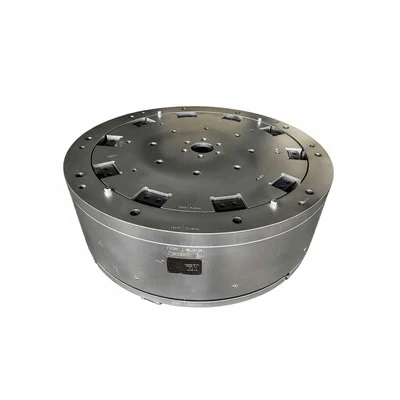
At the end of the day, the CBA for a two-piece mold isn’t about finding the cheapest price—it’s about finding the best value for your specific production needs. If you skimp on upfront quality, you’ll pay for it in spades later, but if you overspend on features you don’t need (like H13 steel for a 10k part run), you’re wasting money. As a two-piece mold supplier, we’re not here to push the most expensive mold—we’re here to help you figure out exactly what you need, so your CBA makes sense, and your project succeeds. If you’re working on a new part, need a quote, or want to walk through your numbers to make sure you’re making the right call, hit us up to connect and chat through your project. We’ve got all the data and experience to help you avoid the mistakes I see every day.
Two Piece Mold References:
- Rosato, D. V., & Rosato, M. G. (2000). Injection Molding Handbook. Kluwer Academic Publishers.
- Kazmer, D. O. (2007). Injection Mold Design Engineering. Hanser Publications.
- International Organization for Standardization. (2019). ISO 10303-238: Industrial automation systems and integration — Product data representation and exchange — Part 238: Application protocol: Numerical control process data.
- Tooling U-SME. (2021). Cost Analysis for Mold Making and Tooling. Society of Manufacturing Engineers.
- Bralla, J. G. (1999). Design for Manufacturability Handbook (2nd ed.). McGraw-Hill.
Anhui Varon Mould Co., Ltd.
We are one of the most professional two piece mold manufacturers and suppliers in China, also support customized service. We warmly welcome you to wholesale premium two piece mold made in China here from our factory. If you have any enquiry about cooperation, please feel free to email us.
Address: Anhui Province, Ningguo City, Economic and Technological Development Zone, Heli Industrial Park, Dongcheng Avenue
E-mail: admin@varonmould.com.cn
WebSite: https://www.wanlongmold.com/
