Hey everyone, if you’ve ever walked past a massive bronze sculpture—like the ones lining city plazas, or the big centerpieces at art parks—you might’ve thought, “That thing’s gotta stay up forever, right?” As someone who runs a bronze sculpture supply business, I’m here to tell you keeping those big pieces stable isn’t just about casting metal and slapping it down. There’s way more that goes into making sure a 10-foot-tall, 2,000-pound bronze piece doesn’t tip over, crack, or fall apart 5 years after it lands. Let me break down how we nail stability for every big sculpture we ship out, the messy, real stuff no one talks about, and the little tricks we’ve learned over the years. Bronze Sculptures
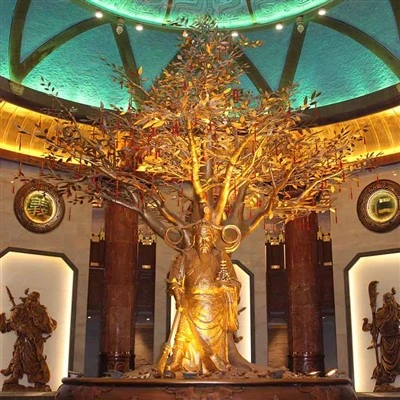
First off, let’s get one thing straight: bronze is actually pretty stable metal, but big-scale bronze sculptures aren’t just a single block. They’re hollow, right? We cast them in sections, weld ’em together, add all those tiny details that make art pop—so stability starts way before we even think about setting it in a park. Wait, no, actually it starts with the design. A lot of artists come to us with super cool, wild concepts—like a sculpture of a horse rearing on two legs, or a wavy abstract piece that leans way to one side. Those are amazing, but we have to tweak the design a little (without ruining the artist’s vision) to make sure it doesn’t fold under its own weight. Last year we had an artist come in with a 12-foot-tall abstract piece that had a big, lopsided “head” sticking out at a 45-degree angle. At first, it looked like it’d tip forward if we just put a normal base on it. We didn’t say “no” or make him change it—we added a hidden rib structure inside the hollow torso. Not only did it add the extra support we needed, but the ribs are hidden so you can’t even see them when the sculpture’s done. That’s the balance we aim for: keeping the art intact while making it hold up.
Next up, the core and armature. Most big bronze sculptures have an internal metal skeleton (armature) before we even pour the bronze. If you skip this, the hollow bronze shell will warp under its own weight. We use steel for armatures—way stronger than bronze, cheaper too, and easier to weld. But here’s the thing about armatures: you can’t just stick a big steel pole in the ground and attach the bronze to it. We size the armature exactly to the sculpture’s weight distribution. For that rearing horse I mentioned earlier, the armature runs all the way up through the horse’s legs, right up into the chest, so the weight of the big upper body is spread across three strong steel legs instead of just two tiny bronze ones. We also add little support pins where the armature meets the bronze shell, not just welding the whole thing together—gives it a little give if the ground shifts later. No one wants a sculpture that cracks because of a tiny ground movement, right?
Then there’s the casting part. When we cast bronze, we use the lost-wax method for big pieces, but we make sure the wall thickness is consistent. If one part of the bronze is way thicker than another, that’s an imbalance. We shoot for a wall thickness of ¼ to ½ inch for most large sculptures—thick enough to be sturdy, not so thick it adds unnecessary weight. For big, lopsided parts, we adjust the casting mold to add a little extra bronze where it’s needed to balance the weight. Also, after we cast the sections, we do a little stress test. We hang each section from a crane and tap it with a small hammer—if it sounds dull, that means there’s a gap or a weak spot we need to fill. If it sounds bright, it’s solid. That’s saved us so many headaches. Once, we had a section that sounded dull, and when we opened it up, there was a void in the armature that we’d missed. Fixed that right away before welding it all together—no way we’d send a sculpture out with a hidden weak spot like that.
Now the part that most people sleep on: installation. The base isn’t just a slab of concrete you drop the sculpture on. That’s where 90% of stability issues happen. First, we have to do a site survey. We show up (we do site visits for every big order, no exceptions) and check the ground. Is it soft? Like, if it’s a grassy park with wet soil, the concrete base will sink a little over time, which tilts the sculpture. We either dig deeper for the foundation, add steel rebar to reinforce it, or use a slightly different concrete mix that’s way denser. For example, a sculpture we installed downtown last year had a base that needed to go 6 feet down because the soil there is super sandy and shifts with rain. If we’d just poured a 1-foot concrete base on top, it would’ve sunk within a year. We also use a mounting flange—kind of like a big metal plate—that bolts to the bottom of the sculpture’s armature and gets anchored into the concrete base. No more just setting the sculpture on top of the base and calling it a day. We torque every bolt to a specific setting, so they don’t loosen over time from wind or temperature shifts. Wind is another big one—big sculptures catch wind, so we calculate wind load for every installation. For a 10-foot sculpture, wind can exert hundreds of pounds of force. We add extra bolts or a wider flange if the site is windy, like a hilltop or by a highway. I always tell clients, “Don’t skimp on the base. That’s where the sculpture lives—treat it right.”
Wait, what about long-term stability? We don’t just hand off the sculpture and forget about it. We offer maintenance checks, too, and we built our process to make that easy. Bronze is self-protective, right? It forms a patina over time that keeps it from rusting, but the metal parts that connect the sculpture to the base—those steel bolts, the armature parts—they can rust, which expands and cracks the bronze. We use galvanized steel for all the connection parts now, or we coat them in a special rust-inhibiting paint before installation. That’s a trick we picked up after a client’s sculpture had a bolt rust through in 7 years, making a tiny crack in the bronze. We fixed it, switched to galvanized bolts, and haven’t had a problem since. Also, we recommend a gentle cleaning every 2-3 years—no pressure washing, that’s too harsh. A soft brush and mild soap, then a clear coat if the client wants to keep the original bronze color (some like the natural patina, which is fine too). That small care keeps everything stable longer.
Let’s talk about mistakes we’ve made, because that’s where you learn. Early on, we took a shortcut on a small 8-foot sculpture for a local library. We just poured a 1-foot concrete base, mounted it, and called it done. A year later, a big rainstorm flooded the area, and the soft soil under the base shifted, tilting the sculpture so far it leaned against a tree. We had to come fix it, re-do the base, and that client didn’t order from us for a while. Never again—we don’t cut corners on site surveys or foundations. Another mistake: we used regular steel for armatures once, and it rusted from the inside out, cracking a bronze section. Now all our armatures are either galvanized steel or stainless steel, no exceptions. Those mistakes cost us, but they made our process way better.
What about custom pieces? Every sculpture is different, so we don’t have a one-size-fits-all plan. For abstract art, which is super popular now, we map every curve and weight point with 3D scanning these days. We run computer models that show us exactly where the weight is distributed, so we can tweak the armature and casting before we even make the wax mold. That’s been a game-changer—we can test stability in a virtual space before pouring any metal, which saves time and money. For a recent 15-foot abstract wave sculpture, the 3D model showed the left side was 200 pounds heavier than the right, so we adjusted the casting mold to add a little extra bronze on the right, balancing it out perfectly. No more guesswork.
I know some people think big bronze sculptures are just for fancy city centers or art museums, but they’re for neighborhoods too, for parks, for schools. Stability isn’t just about not falling over—it’s about making sure that sculpture stays there for generations, so kids 50 years from now can run around it, take photos with it, just like we do with the old bronze statues in downtown areas. That’s why we take this so seriously. We’re not just selling a metal art piece—we’re selling something that will be a part of a community for decades, maybe even centuries.
If you’re an artist, a city planner, a park director, or anyone looking to get a large-scale bronze sculpture made, don’t settle for someone who just says “we make bronze statues.” Ask about their process: do they do site surveys? Do they use internal armatures? Do they test stability for wind and ground conditions? We answer all those questions, no jargon, no hoops. We work with you every step of the way, from the initial design to the final installation, to make sure your sculpture is not only beautiful, but stable enough to last. If you’re ready to talk about your next project, reach out—we’re here to help make something that will stand the test of time.
Bronze Replicas Of Famous People References:
- Sculpture Engineering: Stability and Structural Integrity, International Sculpture Center, 2021
- Bronze Sculpture Conservation: A Practical Guide, American Institute for Conservation, 2019
- Large-Scale Metal Casting: Design and Fabrication, Society of Manufacturing Engineers, 2020
Huizhou Hexin Intelligent Manufacturing Industrial Co., Ltd.
Huizhou Hexin Intelligent Manufacturing Industrial Co., Ltd. is one of the most professional bronze sculptures manufacturers and suppliers in China. Please feel free to buy the newest bronze sculptures made in China here and get pricelist from our factory. All customized products are with high quality and competitive price.
Address: No. 31, Second Industrial Zone, Nankeng Village, Xinxu Town, Huiyang District, Huizhou City, Guangdong Province, P.R.China
E-mail: hztbjr@126.com
WebSite: https://www.bronzehexin.com/
